How are Grave Markers Maintained at Ferncliff Cemetery?
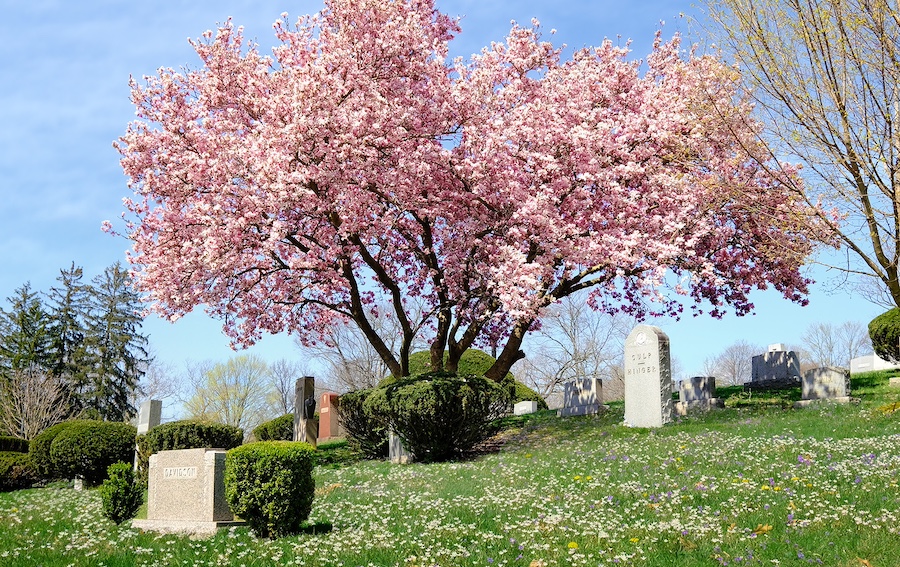
If you’ve visited Ferncliff Cemetery & Arboretum in Springfield, Ohio, you’ve seen grave memorials (often referred to as headstones) that date back to 1863. Learn more about how those memorials are cared for, and how we can protect these final resting places for generations to come.
What are markers and monuments at Ferncliff made from?
Granite and bronze are the most commonly used materials for modern cemetery memorials, including Ferncliff.
On our grounds, bronze is primarily used for flat grave markers, and a popular choice for its durability and appearance. Granite is the most popular choice for upright monuments (also referred to as headstones), as it is available in a variety of beautiful colors and ages well. Marble can also be used for memorials, but requires more maintenance than alternative stones.
Our older memorials, from the 1800s and early 1900s, were primarily made from limestone and sandstone. While beautiful, the practice became less common as these types of stone are prone to weather erosion and staining.These same materials can be seen used in the landmark mausoleums on Ferncliff’s grounds.
What causes grave markers and monuments to erode over time?
While each stone type can be affected differently by the environment, but the main culprits are:
- The freeze-thaw cycles in our climate
- Air pollution
- Moss, algae, and lichen growth
- Tree roots, tree sap, and fallen tree limbs
- Animal activity including digging (which can weaken foundations) or droppings
What does Ferncliff do to clean and preserve headstones?
Ferncliff staff routinely check the grounds to address needs. When possible (depending on the age of the monument and location) we restore stones and raise sinking markers.
Twice annually, Ferncliff Cemetery removes decorations from memorials across the grounds, leaving flowers in approved vases or saddles and flags in a flag holder. We have worked with a preservation company to clean and maintain markers in our veterans sections as needed.
We offer a cleaning service to families who would like their memorials to be cleaned, which can be arranged by contacting our office.

Can visitors clean their loved ones’ grave monuments when they visit Ferncliff?
Yes. Visitors to Ferncliff are welcome to clean the headstones of their family members, or those that they have purchased in advance for themselves. If you would like to clean a memorial that belongs to someone outside of your family, you must get permission from the Ferncliff office staff.
How can I clean a grave memorial?
Below is a list of dos and don’ts from the Ferncliff grounds crew on cleaning monuments and markers. The goal for cleaning should be to remove debris and make inscriptions legible, as gently as possible.
Grave Memorial Cleaning DOs and DONT’s:
- DO:
- Do Get Permission: Ensure you have permission to clean the monument (see a Ferncliff staff member to request permission for any stone not belonging to a member of your family)
- Do Check for Damage: Before cleaning, take time to examine the monument for cracks, flaking layers, heavy damage or foundation issues. If these are present, consult a Ferncliff staff member to ensure cleaning will not worsen damage.
- Do Choose Safe Tools: Soft bristled brushes, plastic scrapers, toothbrushes and wooden toothpicks are good options for getting small details and lettering cleaned out
- Do Soak First: Before cleaning, soak the memorial with distilled water (this helps porous stone from absorbing chemicals)
- Do Use Gentle Cleaning Agents: Water and a gentle brush can be effective to remove build up on memorial stones. If a cleaning agent is needed, Ferncliff’s grounds crew recommends D/2 Biological Solution, which is both biodegradable and effective at removing build up on all types of stones.
- Do Rinse Thoroughly: If the surface is cleaned with an agent like D/2, it’s important to rinse thoroughly to remove all solution from the memorial.
- DON’T:
- Don’t Use Harsh Chemicals: Only water or an approved agent like D/2 should be used to clean grave memorials. Bleach, household cleaners or acidic solutions will lead to staining, discoloring or weakening of the stone.
- Don’t Pressure Wash: Pressure washing can irreparably damage stone. In fact, the VA prohibits the general public from using pressure or power washers on government-furnished headstones.
- Don’t Clean in Extreme Temperatures: Cleaning in extreme hot or cold can degrade the stone.
- Don’t Use Metal Tools: Metal tools can wear away lettering on stones, leave gouges and cause damage.
- Don’t Over Do It: Cleaning gravestones should be done gently, and occasionally. Cleaning too often, too aggressively, or with the goal of making a stone look “new again” can lead to deterioration.
If you have any questions about cleaning memorials, it’s best to ask our staff!
Are there any grave stones that shouldn’t be cleaned?
Yes. If the stone is unstable or broken, cleaning may cause more damage. It’s also not advisable to clean a headstone in extreme heat or cold
To learn more about cleaning grave markers, the National Park Service has a helpful guide, with videos.
Have questions about grave monument cleaning? Contact our team!